

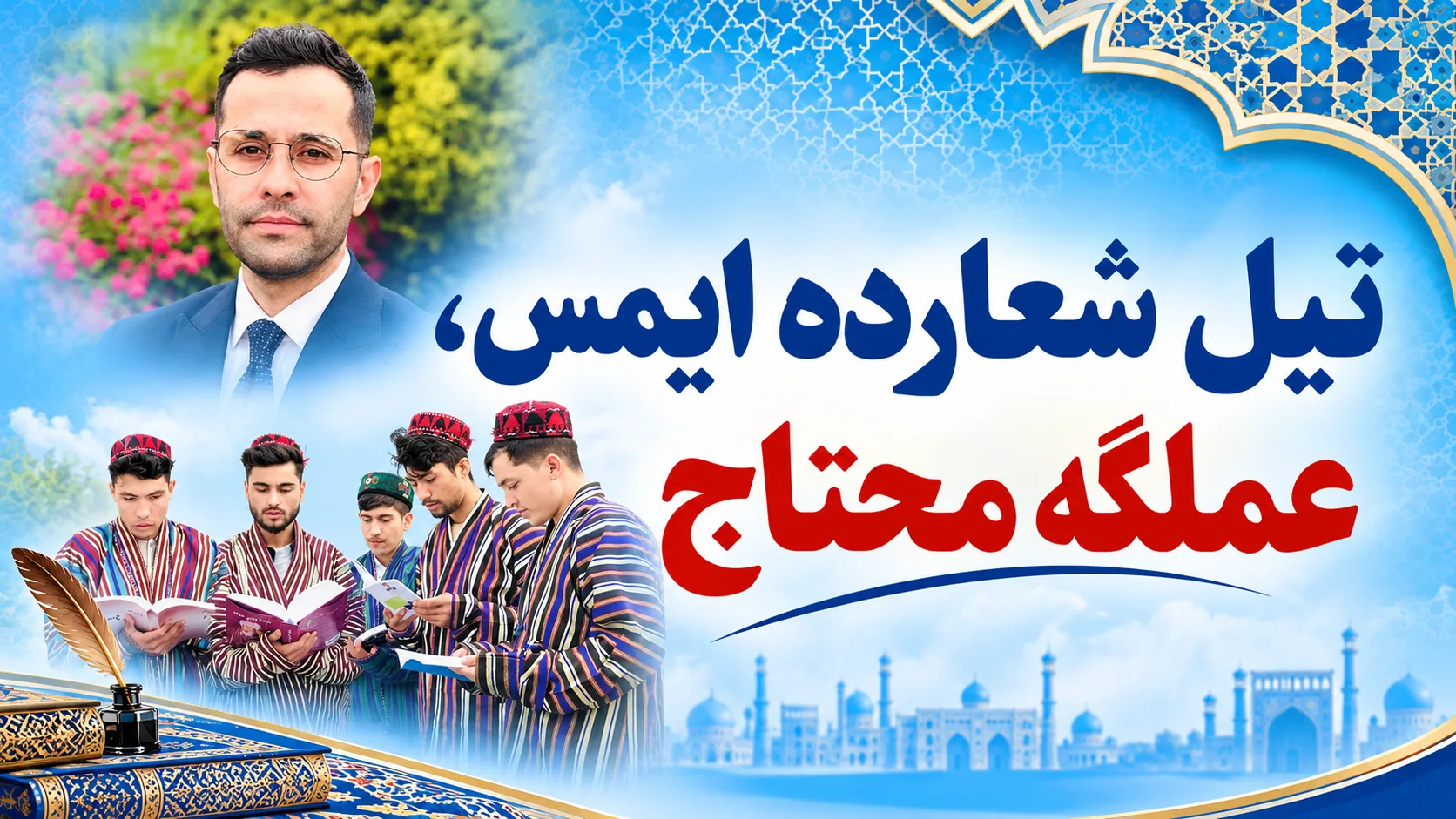
A Reflection on the Future of Afghan Uzbek Turkish, National Identity, and Our Responsibilities Toward Our Mother Tongue
By: Nasir Ahmad Ozbek Oghli
The language of a nation is the mirror of its identity, history, culture, and heritage. Language is not merely a means of communication between people; it is also one of the most important foundations of a society’s existence, national identity, and cultural memory. As long as a language lives, the identity, culture, and history of its people continue to live. However, when a language weakens, the values, historical memory, and cultural heritage associated with that nation face the danger of gradually disappearing.
Like other Uzbek communities living in different parts of the world, the Uzbeks of Afghanistan possess a deep-rooted history, a rich culture, and a valuable literary heritage. Looking back at our past, we recognize that great historical figures such as Amir Timur, Zahir-ud-Din Muhammad Babur, and Ali-Shir Nava'i hold a special place in our history and culture. Bukhara, Samarkand, the Historic Citadel of Herat, and other historical and cultural centers also played significant roles in nurturing generations of scholars, writers, and intellectuals. All of this demonstrates the valuable contributions our people have made to science, literature, culture, and Islamic civilization.
We often speak about our history, language, culture, and great historical figures. We take pride in our past. However, there is a fundamental question we must ask ourselves: To what extent do we demonstrate this pride and love through our actions? How many books, articles, literary works, and academic studies do we produce in our own language? Why is it that we can speak and write comfortably in other languages, yet hesitate when it comes to our mother tongue?
Unfortunately, we sometimes speak extensively about our language and culture, express beautiful slogans, and organize various cultural events. However, once these events come to an end, the continuous and practical efforts necessary for the development of our language often fail to continue. As a result, Uzbek Turkish faces a shortage of resources and publications in fields such as literature, journalism, education, scientific research, and academic content production.
The 29th of Mizan, Uzbek National Language Day, is an extremely valuable opportunity to promote our language, culture, and national identity. Celebrations organized in Afghanistan and different countries around the world undoubtedly carry great significance. These events bring our people together, help younger generations become familiar with their ancestral heritage, and strengthen our cultural bonds.
However, these special occasions should not be limited to one-day celebrations and speeches. Every event should serve as a starting point for future scientific, cultural, and educational initiatives.
For this reason, following these celebrations, we must place greater emphasis on organizing academic conferences, literary gatherings, educational programs, and historical research initiatives. We should collect, preserve, and publish the works of our scholars, poets, and writers. We must safeguard the valuable books left to us by our elders and intellectuals and create opportunities for their republication. At the same time, we should support young writers and talented individuals, helping to nurture a new generation of authors who write in Uzbek Turkish.
Today, social media and modern technologies offer us tremendous opportunities. Through Facebook, YouTube, and other digital platforms, we can share our history, culture, literature, and ideas with people in our mother tongue. Even a short article, an audio message, a written reflection, or a video can make a valuable contribution to preserving and promoting our language.
Furthermore, introducing the Uzbek language and culture to the international community is equally important. Translating our literary and cultural works into English and other world languages will enable international researchers, universities, and wider audiences to become familiar with our people's history and culture. If we do not produce reliable sources ourselves and make our works accessible to others, how can we expect the world to understand us better?
At this point, there are three important questions we must ask ourselves:
First: Why are we confident when speaking and writing in other languages, yet become hesitant when it comes to writing and expressing our thoughts in our mother tongue?
Why do we comfortably share posts in other languages on social media, while hesitating to write an article or even a simple post in our own language?
We must overcome this fear and hesitation. Regardless of how proficient we are in our mother tongue, we should begin writing and expressing our thoughts in it to the best of our abilities.
Second: If we ourselves do not believe in our language and make efforts to develop it, how can we expect others to show interest and respect toward it?
Respect for a language begins with the individual. If we do not produce scientific, cultural, literary, and media content in our own language, how can we strengthen its position among other languages?
If we want our language to develop, we must first value it ourselves and use it more frequently in our daily lives and professional activities.
Third: Why are we afraid of criticism and making mistakes?
When writing in one's mother tongue, especially for those who have not yet gained sufficient writing experience, making mistakes is perfectly natural. However, we should not blame, belittle, or discourage one another because of such mistakes.
On the contrary, we should support one another with respect, point out shortcomings constructively, and work together to correct our mistakes. A language can only develop when its speakers and writers come together with confidence, solidarity, and a shared sense of responsibility.
The development of our language is not solely the responsibility of one association, one cultural institution, or a limited number of volunteers. It is a shared responsibility that belongs to all of us. This movement must begin with ourselves, our families, and the communities in which we live.
We should encourage our children to speak, read, and write in their mother tongue and provide younger generations with greater opportunities in education, literature, media, and technology.
In conclusion, we must ask ourselves: If we truly love our language, what have we done today for its future? If we take pride in our history and culture, what steps have we taken to document this heritage and pass it on to future generations?
Love for a language is not demonstrated merely by taking pride in it. It becomes meaningful when we read it, write it, produce works in it, support its writers, and make concrete efforts toward its development.
It is also important to emphasize that preserving, developing, and keeping our mother tongue alive is not merely an expression of national commitment; it is also a bright gateway to understanding other cultures more deeply.
Our attachment to our own language brings us closer to the cultures of other nations as well. By deepening mutual cultural understanding, we contribute to strengthening respect, tolerance, and a culture of peaceful coexistence among communities.
A Language Needs Action, Not Slogans!Let us not be afraid to write in our own language. Let us believe in our language, support one another, and pass this valuable heritage on to future generations in a stronger form.
Because the future of a language is determined not only by the greatness of its past, but also by the efforts and dedication we demonstrate for it today.


Community discussion
No comments yet
Be the first to share a thoughtful response.