

Reporter: Muhammad Fahim Azimi
The Legitimacy of Armed Resistance Against the Taliban: A Political, Moral, and Legal Debate
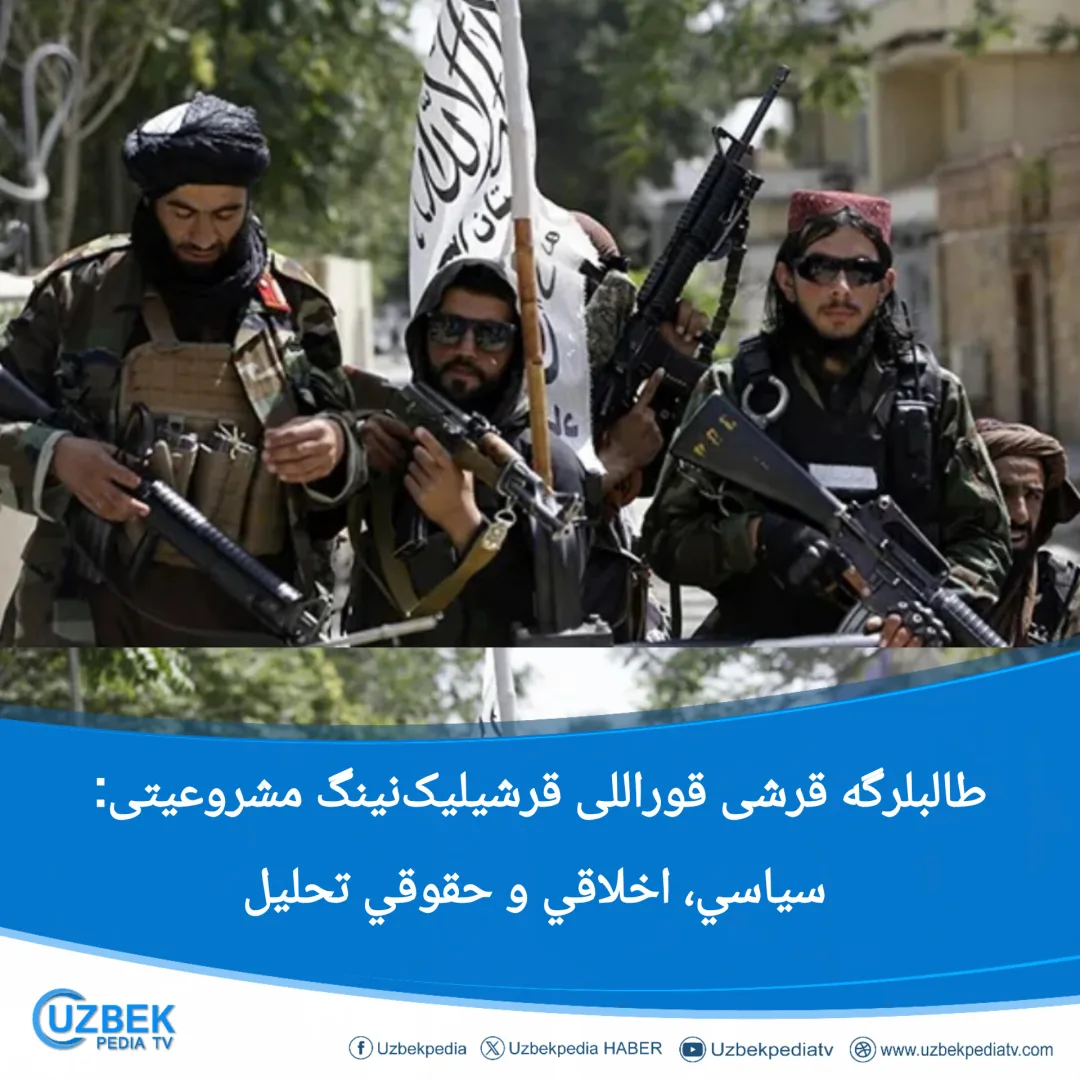
Muhammad Fahim AzimiIn recent weeks, the activities of military fronts opposed to the Taliban have entered a new phase. The Afghanistan Freedom Front and the Sepahiyan-e Mihan Front (“Soldiers of the Homeland”) have conducted operations against Taliban forces in various parts of the country, particularly in the northeastern provinces. Badakhshan, in particular, has emerged as a focal point of these movements, with both fronts appearing to maintain a greater presence and level of operational activity there than in other regions. Although these operations have not yet reached a scale capable of altering the military balance of power against the Taliban, they have once again brought a fundamental question to the forefront of Afghanistan’s political debate: Is armed resistance against the Taliban politically, morally, and legally defensible?
This is not a new question. Since the Taliban’s return to power, their opponents have remained divided over how best to confront the group. One camp maintains that the only viable path is civil resistance, civil disobedience, public pressure, and the mobilization of the international community. The other argues that the Taliban fundamentally reject peaceful means of political engagement and will only reconsider their grip on power when confronted with the tangible costs of maintaining it. Now, after nearly five years under Taliban rule, these competing positions must be assessed not through political aspirations or moral idealism alone, but against the objective realities of Afghanistan.
In any discussion of armed resistance, one fundamental misconception must first be addressed: defending the legitimacy of armed resistance is not equivalent to advocating war, just as defending the right to legitimate self-defence does not amount to glorifying violence. War, regardless of its justification, is inherently destructive. It claims human lives, devastates economies, displaces populations, and inflicts wounds that can endure across generations. No rational person would choose war over peace. But the essential question is whether peace remains a genuine and available option.
In societies where governments hold elections, permit political parties to operate, protect independent media, tolerate criticism, guarantee the right to peaceful assembly, and maintain an independent judiciary, resorting to violence is neither necessary nor justifiable. Such societies offer institutional mechanisms through which grievances can be addressed and political change pursued peacefully. But what happens when all these avenues are systematically dismantled? What happens when political power leaves no legitimate channel for change and responds to every expression of dissent with intimidation, imprisonment, and violence? Can an entire population still be expected to confine its struggle exclusively to peaceful methods when the ruling authorities have effectively criminalised peaceful opposition? This is precisely the predicament facing Afghanistan today.
Since reclaiming control of Afghanistan, the Taliban have dismantled virtually every meaningful avenue of civic and political participation. The constitutional order was abolished, elections were eliminated, political parties were effectively excluded from public life, independent media were subjected to sweeping restrictions, and civil society institutions were weakened or shut down. Peaceful street protests were met with arrests, beatings, torture, intimidation, and reports of enforced disappearances.
Afghan women were among the first to demonstrate that peaceful resistance remained possible. They took to the streets unarmed, carrying nothing but slogans and placards, demanding their fundamental rights to education, employment, freedom of movement, and participation in public life. Their demands were neither violent nor revolutionary in nature; they were demands for the most basic rights recognised under international human rights principles. Yet the Taliban's response was not dialogue, negotiation, or political compromise. It was repression, physical abuse, arbitrary detention, threats, and the systematic silencing of their voices.
Nor has this repression been limited to women. Journalists, university professors, civil society activists, writers, critical religious scholars, and even former Taliban members who expressed dissenting views have faced intimidation, detention, and, in some cases, violence. Over nearly five years, the Taliban have demonstrated little willingness to accommodate political pluralism. Instead, they have progressively consolidated their monopoly over political, social, and institutional power.
Under such circumstances, advocating exclusively for civil resistance risks becoming less a practical political strategy than a moral aspiration detached from the realities on the ground. Ethical principles can guide political engagement only when the opposing authority recognises at least some minimum obligations of law, accountability, and restraint. But when a regime operates without meaningful institutional accountability, rejects political pluralism, and systematically suppresses peaceful opposition, the question becomes unavoidable: through what mechanisms can civil resistance compel such a regime to change its behaviour? This question cannot be answered through sentiment alone. It requires serious consideration through the framework of political philosophy.
Since the seventeenth century, one of the central debates in political philosophy has concerned the relationship between governmental legitimacy and the people's right to resist oppressive authority. John Locke, one of the most influential theorists of classical liberalism, argued that government derives its legitimacy from the protection of individuals' natural rights, particularly life, liberty, and property. Political authority, in Locke's conception, is a trust established by the people, not an absolute or divinely sanctioned entitlement. When a government ceases to protect those rights and instead becomes an instrument of their systematic violation, it undermines its own legitimacy and gives the people grounds to withdraw their consent and resist.
This principle subsequently influenced numerous revolutionary and liberation movements, including the American Revolution and anti-colonial struggles across Asia and Africa. The essential point within this intellectual tradition, however, is that resistance is not necessarily the first course of action. Peaceful remedies and institutional mechanisms should be pursued wherever they remain genuinely available. The right to resist becomes particularly relevant when those mechanisms have been systematically eliminated and political authority has transformed itself into an instrument of oppression.
Applying this standard to contemporary Afghanistan raises a series of fundamental questions. Can Afghans vote the Taliban out of power? No, because elections do not exist. Can they establish independent political parties and challenge the ruling authorities through political competition? No, because the Taliban refuse to recognise independent political parties as legitimate participants in the political system. Can citizens organise public opinion through independent media? Their ability to do so has been severely restricted by censorship, intimidation, and government control. Can they change Taliban policies through peaceful demonstrations? The experience of nearly five years suggests that such protests have been met primarily with repression rather than meaningful political engagement. Is there an independent judiciary through which citizens can challenge abuses of power? There is no genuinely independent judicial system capable of holding the Taliban leadership accountable; the judiciary operates within the ideological and political framework established by the movement's leadership, ultimately under the authority of Mullah Hibatullah Akhundzada.
When virtually every institutional and peaceful mechanism for political change has been eliminated, the fundamental conditions necessary for effective civil resistance are severely compromised.
At this point, a familiar argument is often raised: even if civil resistance produces no immediate results, it remains preferable to war. Morally, this position deserves serious consideration. However, it rests on an important assumption: that civil resistance and armed resistance are equally available choices under the existing political conditions. They are not. Civil resistance requires at least some political and social space in which citizens can organise, communicate, mobilise, and exert pressure. Without such space, even the most determined peaceful movements can be systematically silenced.
The Indian independence movement against British colonial rule, the American civil rights movement, and the struggle against apartheid in South Africa all developed under different historical and political circumstances, but each benefited, to varying degrees, from mechanisms through which public opinion, legal institutions, media exposure, domestic mobilisation, or international pressure could influence the authorities. These examples should not be romanticised or treated as identical experiences. Nevertheless, they demonstrate that the effectiveness of peaceful resistance depends, in part, on the existence of political and institutional conditions that allow pressure to accumulate and produce consequences.
The Taliban, by contrast, have shown little accountability to domestic public opinion, do not derive their authority from electoral consent, and have demonstrated no meaningful willingness to accept political competition. Nor has international diplomatic engagement, thus far, produced fundamental changes in their governing practices. This does not mean diplomacy and peaceful resistance have become entirely meaningless. It does, however, raise serious doubts about whether they can succeed as the sole strategies for confronting the regime.
The political reality is that the Taliban have consistently defined their relationship with power through coercion rather than democratic consent. During their twenty-year insurgency against the former Afghan Republic, they did not seek to challenge the political system through elections, parliamentary competition, or civil disobedience. Instead, they waged an armed campaign against the state and ultimately returned to Kabul through military force as the republican system collapsed. Yet the same movement now portrays armed opposition to its rule as inherently illegitimate, branding its opponents as rebels, criminals, or terrorists.
This contradiction exposes a fundamental inconsistency in the Taliban's political position. They justified their own armed struggle against a government they considered illegitimate, but deny others the right to challenge their authority, regardless of how that authority was established or how it is exercised. In effect, the Taliban appear to apply one standard to their own pursuit of power and an entirely different standard to those who oppose them. Their understanding of political legitimacy is therefore not grounded in consistent democratic or constitutional principles, but increasingly reflects the interests of a movement determined to preserve its monopoly over power.
Ultimately, the debate in Afghanistan today cannot be reduced to a simplistic choice between war and peace. Peace built upon the systematic exclusion of society, the monopolisation of political power, the denial of fundamental freedoms, and the suppression of every form of dissent is not necessarily genuine peace. It is, at best, an enforced silence maintained through fear and coercion. The absence of open warfare should not be confused with the existence of justice, stability, or political legitimacy.
The central question, therefore, is not whether war is desirable. It is not. The question is whether a population that has been deprived of virtually every peaceful avenue for political change is morally obligated to accept the permanent destruction of its freedoms without the right to defend itself. When a regime systematically closes every door to peaceful reform, does it retain the moral authority to demand unconditional submission from the very people whose rights it violates?
These are not merely political questions. They lie at the heart of the philosophical debate over freedom, political legitimacy, popular sovereignty, and the limits of governmental authority.


Community discussion
No comments yet
Be the first to share a thoughtful response.