
Trending
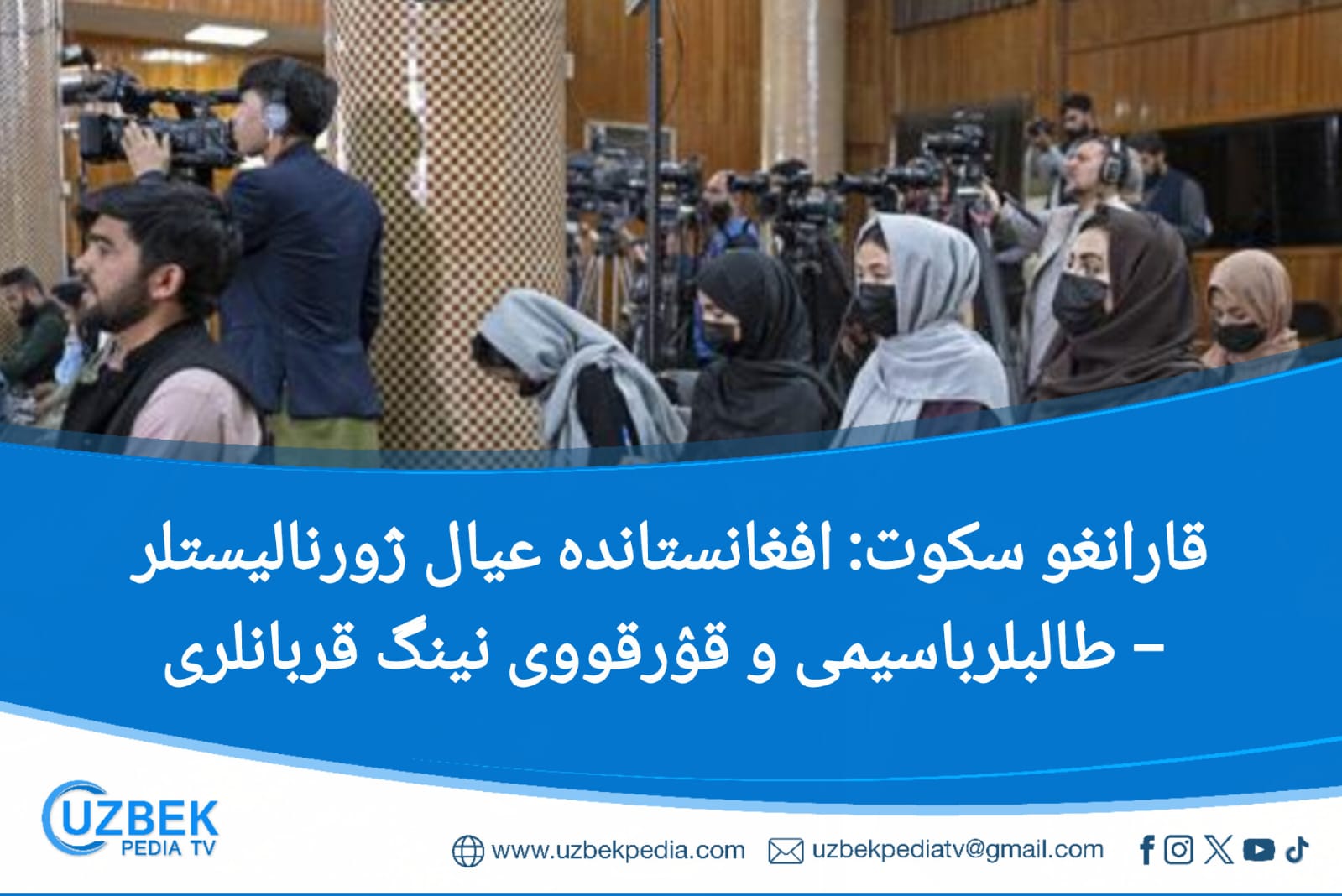
Women Journalists Blocked From Employment as Afghan Media Avoid Hiring Them Over Taliban Pressure
Female journalists across Afghanistan say they are facing an unprecedented decline in job opportunities as media organizations refuse to hire women out of fear of Taliban retaliation.
Female journalists across Afghanistan say they are facing an unprecedented decline in job opportunities as media organizations refuse to hire women out of fear of Taliban retaliation.
They warn that the environment for journalism—particularly for women—has deteriorated to one of the worst in the world, with almost no hope for improvement under the current regime.
Several women journalists told UzbekPedia that since the Taliban regained control, job openings have nearly disappeared due to the group’s harsh restrictions on media operations.
Many institutions, they say, avoid recruiting women to prevent possible confrontation with Taliban authorities.
Zarina Azizi (pseudonym), a journalist, says that employment options for media workers—especially women—have been drastically reduced under Taliban rule.
She stresses that strict laws and heavy pressure on media outlets have made the situation unbearable.
“Right now, the situation for journalists, particularly women, is extremely difficult,” she says.
“Whenever institutions feel under pressure, the first people they dismiss are women.
This is exactly what happened in my workplace.
Media organizations do not want any trouble in the future, so they remove women from their staff.
” Another journalist, Javedeh Rahimi (pseudonym), says unemployment, discrimination, and the systematic exclusion of women have pushed her to the edge emotionally.
“I applied for a job in a social media department.
They accepted me at first, but later called back to say they couldn’t hire women.
I was devastated,” Rahimi explains.
“When you face discrimination at every step, it destroys you from the inside.
” Zubaida, a recent journalism graduate, says she studied the profession to amplify the voices of Afghan women, but today she, like thousands of others, has been silenced.
“I wanted to be the voice of women and the nation,” she says.
“But not only am I unable to work in journalism, I have also been deprived of all my basic rights.
Afghanistan has become one of the most difficult countries for media professionals.
” Marjan Seddiqi (pseudonym), a journalist with over seven years of experience, says she lost her job as several media outlets downsized or shut down due to Taliban restrictions.
She believes there is no prospect for improvement as long as the Taliban stay in power.
“Only a tiny number of female journalists are still employed,” she says.
“Most are jobless or forced into unrelated, low-paid work.
Many media organizations have become propaganda channels for the Taliban.
Freedom of expression barely exists.
” Leila Azimi (pseudonym) also points to the steep decline in opportunities for women journalists, driven by security risks, censorship, and fear of Taliban reprisals.
She eventually left journalism and shifted to graphic design.
“The moment I realized I could no longer report freely, it felt like all my dreams collapsed,” she says.
“Opportunities for women have almost completely disappeared.
Media outlets function under fear.
I moved to graphic design only because I could work from home.
” Meanwhile, Hamid Obaid, head of the Afghan Journalists’ Protection Organization (AMSO), describes Afghanistan’s media situation as critical and worsening under Taliban censorship and surveillance.
Since their return to power, the Taliban have systematically removed women from public life by restricting their access to education and employment.
The regime dictates the content of domestic media and bans coverage that contradicts its ideology.
Female journalists are forced to cover their faces, and many are barred from attending press conferences.
According to the Afghan Journalists Center, at least 140 violations against media workers were documented in the first six months of 2025—a 56% increase compared to the same period last year.
The United Nations Assistance Mission in Afghanistan (UNAMA) also reported that between August 15, 2021, and September 30, 2024, the Taliban arbitrarily detained and tortured journalists at least 256 times.
Reporter: Mohammad Fahim Azimi Reporter.